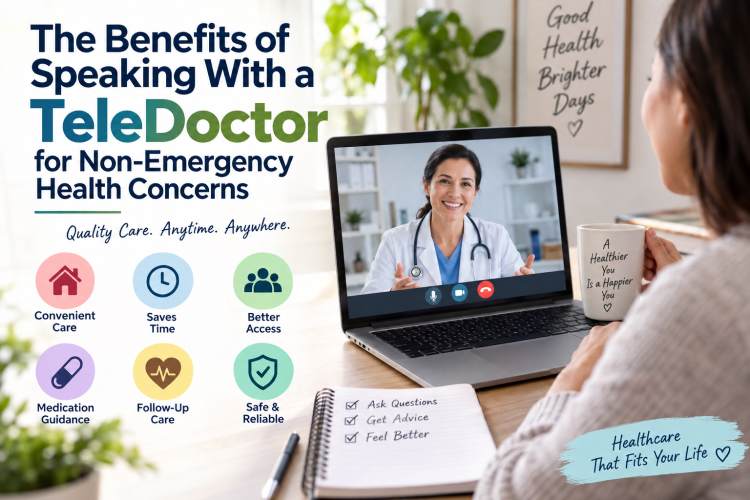
Need medical advice but don’t want to sit in a crowded waiting room? A TeleDoctor can help with many non-emergency health concerns through a phone or video visit. Telemedicine offers convenient access to qualified healthcare professionals, follow-up care, medication guidance, and basic health advice from home.
Have you ever felt sick but wondered if your symptoms were really worth a trip to the doctor’s office? That is where a TeleDoctor can make healthcare much easier. A telehealth appointment lets you speak with a healthcare professional by phone, video, or an online platform. It can be useful for common concerns that do not require urgent hands-on care. You can often get medical guidance without dealing with traffic, parking, or a long waiting room. 📱
🩺 What Is A TeleDoctor?
A TeleDoctor is a healthcare professional who provides medical advice remotely. Depending on the service, your appointment may happen through a video call, phone call, or secure online system. The provider can ask about your symptoms, review your health history, and discuss possible next steps. They may also recommend an in-person visit if your condition needs a physical examination.
Telemedicine works especially well for non-emergency health concerns that can be discussed without immediate hands-on treatment. Examples include mild respiratory symptoms, allergies, skin concerns, medication questions, and routine follow-ups. It does not replace every type of medical care. Instead, it gives you another practical way to connect with healthcare professionals.
⏰ Convenient Healthcare From Home
One of the biggest benefits of telehealth is convenience. You do not always need to take time off work or school for a simple medical consultation. Instead, you can connect with a provider from a private location with an internet connection or phone. This can make healthcare easier to fit into a busy schedule.
TeleDoctor visits can also reduce travel time. You avoid driving to a clinic, finding parking, and sitting in a waiting room. That can be especially helpful when you feel unwell or have limited transportation options. A few minutes online can sometimes replace hours of travel and waiting. 😊
| Traditional Doctor Visit | TeleDoctor Visit |
| Travel to the clinic | Connect from home |
| Possible waiting-room time | Usually scheduled remotely |
| Parking may be needed | No parking required |
| Physical examination available | Remote assessment |
| Best for hands-on care | Useful for many routine concerns |
🌎 Better Access To Healthcare
Telemedicine can make healthcare more accessible for people who live far from medical offices. Rural communities may have fewer nearby healthcare providers. A virtual appointment can reduce the distance between patients and available medical professionals.
It can also help people who have transportation challenges or busy schedules. Parents may find remote consultations easier when arranging childcare is difficult. Workers may appreciate appointments that reduce time away from their jobs. Accessibility is one reason telehealth has become an important part of modern healthcare.
🤧 Helpful For Common Non-Emergency Problems
TeleDoctors can discuss many everyday health concerns. The exact services depend on the provider, but virtual healthcare may be appropriate for issues such as:
- Cold and flu symptoms
- Seasonal allergies
- Mild coughs or sore throats
- Minor skin concerns
- Headaches
- Digestive concerns
- Medication questions
- Routine follow-up appointments
- General health questions
A provider can ask targeted questions and help determine what you should do next. They may recommend home care, prescribe medication when appropriate, or suggest an in-person examination. The important point is that telehealth does not mean every problem should be treated remotely.
💊 Medication Guidance Without The Extra Trip
Medication questions are another reason people choose virtual healthcare. You may want to discuss a new prescription, possible side effects, or whether you should continue taking a medication. A TeleDoctor can review the information you provide and explain appropriate next steps.
In some situations, a healthcare professional may prescribe medication after a telehealth consultation. However, prescriptions are not guaranteed. The provider must decide whether remote evaluation is enough to prescribe safely. Never start, stop, or change prescription medication without appropriate medical guidance.
🔄 Easier Follow-Up Care
Follow-up appointments can sometimes be simpler through telemedicine. If your healthcare provider already knows your condition, you may not need another lengthy office visit. A virtual appointment can allow the provider to ask how your symptoms have changed. You can then discuss whether your current treatment appears to be working.
This can also encourage patients to stay connected with their healthcare team. Consistent follow-up matters, especially when symptoms need monitoring. If your provider notices something concerning during a virtual appointment, they can recommend an in-person evaluation.
🔐 Private And Comfortable Conversations
Some people feel more comfortable discussing health concerns from home. Being in a familiar environment can make it easier to explain symptoms honestly. You may also avoid the discomfort of discussing personal concerns in a busy clinic environment.
Still, privacy matters during telehealth visits. Choose a quiet and private space whenever possible. Use a trusted healthcare platform and avoid discussing sensitive medical information over unsecured public networks. 🛡️ Your comfort should never come at the expense of privacy.
💻 What Happens During A TeleDoctor Visit?
A virtual healthcare appointment is usually straightforward. You may first provide basic information about your symptoms, medical history, and medications. The provider then asks questions and may visually assess certain symptoms through video.
A typical appointment may follow these steps:
- Describe your main concern.
- Answer questions about your symptoms.
- Discuss your medical history and medications.
- Follow the provider’s instructions for a remote assessment.
- Review treatment or home-care options.
- Learn whether you need in-person follow-up.
The process can vary between healthcare services. Some providers may also ask you to check your temperature, blood pressure, or other basic measurements if you have suitable equipment.
📋 Telehealth Vs. In-Person Care
Telehealth and traditional appointments each have an important role. A virtual visit may be ideal when your concern can be evaluated through questions and visual information. An in-person visit is often better when your provider needs to physically examine you or perform testing.
The best choice depends on your symptoms and medical needs. A TeleDoctor can also help you decide whether you need further care. When in doubt, explain your symptoms clearly and let the healthcare professional guide the next step.
| Situation | TeleDoctor May Help | In-Person Care May Be Better |
| Mild cold symptoms | ✅ | Sometimes |
| Medication questions | ✅ | Sometimes |
| Routine follow-up | ✅ | Sometimes |
| Minor skin concern | ✅ | Sometimes |
| Need for physical examination | Limited | ✅ |
| Laboratory testing | Limited | ✅ |
| Severe or rapidly worsening symptoms | ❌ | ✅ |
💰 Can Telemedicine Save Time And Money?
Telemedicine may reduce some costs associated with healthcare visits. You may spend less on transportation, parking, or time away from work. However, the price of a virtual appointment varies by provider, insurance plan, and type of service.
Some health plans cover telehealth services, while others may have different rules. Before booking, check your insurance benefits and the provider’s pricing. Affordable healthcare is valuable, but quality and appropriate medical care should come first.
👨👩👧 Useful For Busy Families
Families often have several healthcare needs at the same time. A child may develop mild symptoms while a parent needs a medication follow-up. Telehealth can make some of these appointments easier to manage without traveling to different clinics.
It can also help reduce disruptions to daily routines. Parents can connect with a healthcare professional while staying close to home. However, children and other family members may sometimes require an in-person examination. Always follow the provider’s recommendation when remote care is not enough.
🚨 Know When Telehealth Is Not Enough
Telemedicine is not designed for medical emergencies. Serious symptoms may require immediate in-person treatment or emergency services. Do not delay urgent care because you are waiting for a virtual appointment.
Seek emergency medical help for symptoms such as severe difficulty breathing, severe chest pain, loss of consciousness, signs of a stroke, or other life-threatening conditions. When a situation seems urgent, contact your local emergency service immediately. 🚑 It is always better to seek urgent help than to wait for a routine telehealth consultation.
⭐ How To Get More From Your TeleDoctor Visit
A little preparation can make your appointment more useful. Before the call, write down your main symptoms and when they started. Also prepare a list of current medications, allergies, and important health information.
You can make your appointment more productive by:
- Writing down your questions beforehand
- Recording when symptoms began
- Checking your temperature if needed
- Keeping medication information nearby
- Choosing a quiet location
- Taking notes during the appointment
Clear information helps your provider make better decisions. Do not leave out symptoms because they seem embarrassing or unimportant. Even small details can affect the advice you receive.
🌟 Why TeleDoctors Are Changing Everyday Healthcare
Telemedicine has changed how people connect with healthcare professionals. Instead of viewing healthcare access as something that always requires a clinic visit, patients now have more options. Virtual care can provide convenience while still connecting people with qualified medical professionals.
The biggest benefit is flexibility. You can receive guidance for many non-emergency concerns without immediately disrupting your entire day. Telehealth is not a replacement for traditional healthcare—it is another useful tool for accessing it.
💡 Key Takeaways For Patients
Speaking with a TeleDoctor can be a practical option when you have a non-emergency health concern. It can save travel time, improve access, support follow-up care, and make routine medical conversations more convenient. It may also help you decide whether your symptoms need further evaluation.
| Benefit | Why It Matters |
| Convenience | Get care without unnecessary travel |
| Accessibility | Connect with providers from more locations |
| Time savings | Reduce commuting and waiting |
| Follow-up care | Make routine check-ins easier |
| Medication support | Discuss prescriptions and side effects |
| Triage | Learn whether in-person care may be needed |
The key is knowing when virtual care is appropriate. For mild or routine concerns, a TeleDoctor may be a convenient first step. For emergencies, seek immediate medical attention instead.
❓ Frequently Asked Questions
Can I Talk To A TeleDoctor For A Cold?
Yes, a TeleDoctor can often discuss mild cold symptoms. They can recommend appropriate next steps based on your symptoms. They may advise an in-person visit if your condition needs further examination.
Is Telehealth Good For Non-Emergency Care?
Yes, telehealth can be useful for many non-emergency health concerns. It can provide medical guidance without requiring a clinic visit. The provider will determine whether remote care is appropriate.
Can A TeleDoctor Prescribe Medicine?
A TeleDoctor may prescribe medication when medically appropriate. The decision depends on your symptoms, medical history, and applicable prescribing rules. Some conditions still require an in-person examination before treatment.
When Should I Avoid A TeleDoctor?
Avoid relying on telehealth when you have symptoms that may indicate a medical emergency. Severe breathing problems, serious chest pain, or loss of consciousness require urgent medical attention. When symptoms are severe or rapidly worsening, seek immediate care.
How Do TeleDoctor Appointments Work?
You usually describe your symptoms during a phone or video consultation. The provider asks questions and may perform a limited remote assessment. They then explain treatment options and whether you need further medical care.
Conclusion
Speaking with a TeleDoctor can make healthcare more convenient, accessible, and flexible for many non-emergency concerns. You can discuss common symptoms, medication questions, and follow-up needs without always traveling to a clinic. Telemedicine can also help you understand whether an in-person appointment is necessary.
Still, virtual care has limits. It cannot replace every physical examination, test, or emergency treatment. The safest approach is to use telehealth when appropriate and seek in-person or emergency care when your symptoms require it. When used wisely, a TeleDoctor can be a valuable part of your healthcare options.